Infrastructure
What a $251 Million Water Loan Can Teach Midwest Ratepayers About Utility Debt
A large federal loan announcement is a starting point for asking how a water project will be financed, repaid and reflected in household bills.
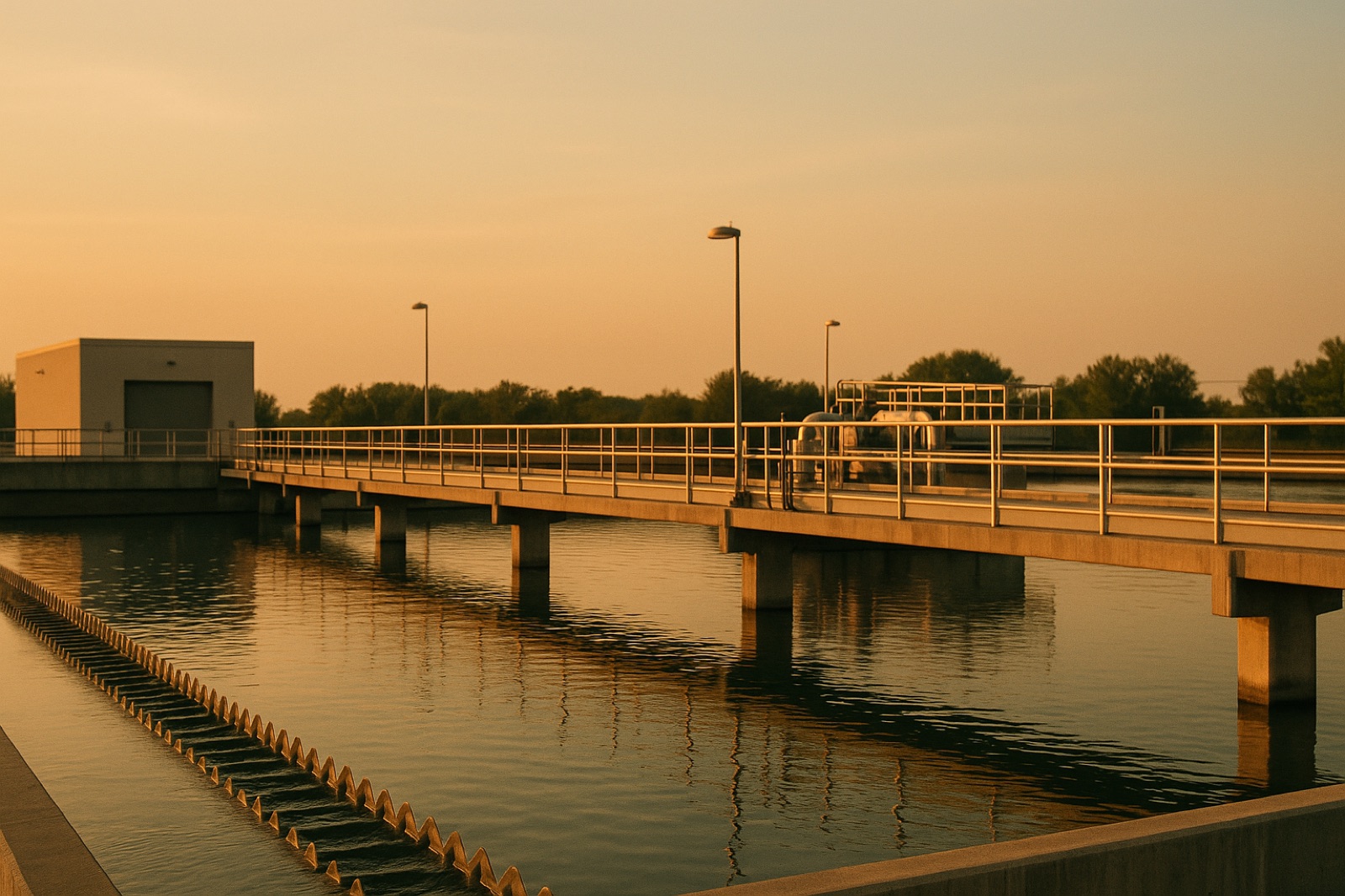
A drinking water project can be physically necessary and financially complicated at the same time. Treatment plants, pumps, storage tanks and transmission mains last for decades, but utilities rarely have enough cash on hand to pay for major replacements all at once. Borrowing spreads that expense across many years and, in principle, across many of the customers who will use the improvements.
That is the useful Midwest lesson in a California financing announcement. Water Finance and Management reported that the U.S. Environmental Protection Agency announced a $251 million Water Infrastructure Finance and Innovation Act loan on Sept. 18. The loan went to the Las Virgenes-Triunfo Public Financing Authority for improvements to several drinking water treatment plants in Los Angeles and Ventura counties. The Water Finance and Management account of the WIFIA loan, by WFM Staff, provides the essential facts without answering the questions that customers of any utility should ask next.
A loan is financing, not free money
The first distinction is simple but important. A loan must be repaid. A grant generally does not require repayment if its conditions are met. A utility may assemble both, along with cash reserves, bonds or state financing, to cover one construction program.
That mix matters because the headline project cost is not necessarily the amount customers will repay through rates. Interest, the repayment schedule, reserve requirements and other financing costs all affect the total. Grants and existing cash can reduce borrowing, while project changes or construction delays can increase the eventual need.
For a Midwest household reading about a local water project, the first useful question is therefore not just, “How much does it cost?” It is, “How much will the utility borrow, on what terms, and from which revenue?”
Follow the repayment source
Water debt is commonly supported by utility revenue. That revenue comes largely from customer bills, although connection charges and other sources may contribute. The practical issue for customers is how debt payments fit alongside routine expenses such as staffing, electricity, chemicals, testing and repairs.
A utility can raise additional revenue by changing its fixed monthly charge, its price per unit of water, or both. Those choices distribute costs differently. A higher fixed charge affects every connected account even when water use is low. A higher usage charge places more of the increase on customers who consume more water. Some rate structures use tiers, customer classes or minimum charges, adding another layer to the calculation.
Customers should look for a bill illustration using several realistic usage levels, not only a percentage increase. A percentage can conceal the difference between a few dollars on one account and a much larger change for another.
Match the financing term to the asset
Long-lived infrastructure is one reason utilities borrow. If a treatment improvement will serve customers for decades, paying for it over time can avoid placing the full burden on today’s customers. But long repayment periods can also increase total interest expense and leave less room for future borrowing.
The relevant comparison is between the expected working life of the improvement and the life of the debt. A utility should also explain whether the project replaces an aging asset, adds capacity, responds to a treatment requirement or combines several purposes. Those categories help customers understand why work is needed now and what problem the borrowing is intended to solve.
Another question is whether the financing covers a complete project or one phase. Treatment plant work often arrives as a sequence of design, permitting, construction and startup activities. A loan announcement may represent an important milestone without representing the final cost.
Build a four-line financing summary
Before a public hearing or board meeting, residents can reduce a thick financing package to four lines: total project cost, borrowed amount, expected repayment period and estimated effect on a typical bill. A fifth line can identify grants or other funds that do not come directly from new borrowing.
If one of those entries is missing, that absence becomes a focused public question. Residents can also ask when repayment begins, whether rates are expected to rise in stages and what assumptions were used for customer growth, water sales and operating costs.
The California announcement does not determine what any Missouri, Illinois or Great Lakes utility should build or charge. It does illustrate the scale at which drinking water improvements may be financed. For Midwest customers, the durable lesson is to read beyond the loan amount. The public value of financing becomes clearer only when the project purpose, repayment source and household bill effect appear on the same page.