Infrastructure
The Water That Sits in the Pipe: Reading Residence Time in a Town's Mains
Water that lingers in a dead-end line changes slowly out of sight, so a town can ask its utility how it tracks that before a complaint arrives.
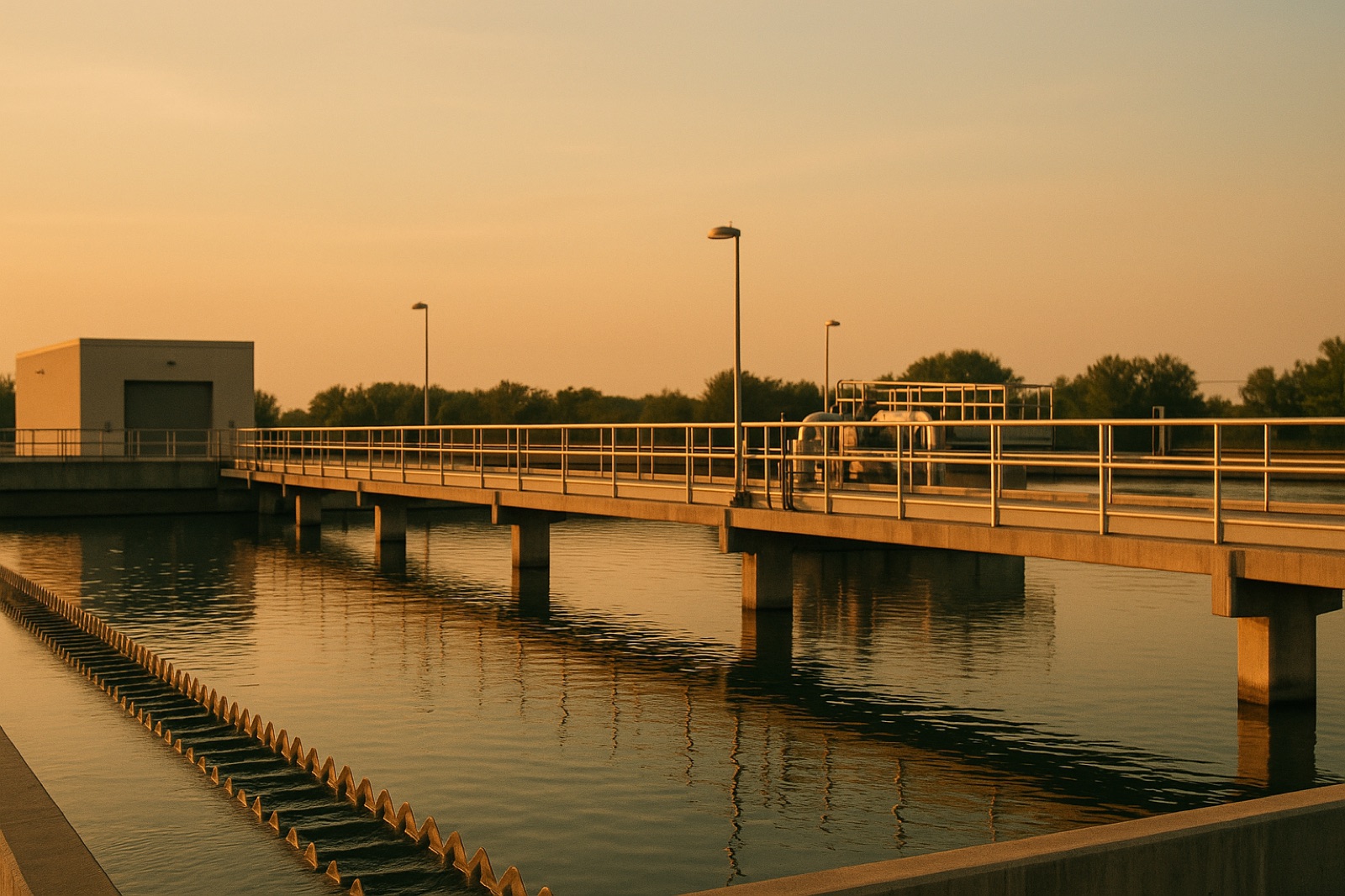
Most public talk about a water system focuses on how much water moves through it. Fewer people ask how long a particular drop has been sitting in the pipes before it reaches a kitchen tap. Utility engineers often call this water age or residence time, and it is one of the quieter factors in how a system performs, especially at the edges of a town where the pipe network thins out.
The basic idea is simple. Water leaves a treatment plant carrying a disinfectant residual, commonly chlorine or chloramine, and that residual weakens as the water travels through the network. In a well-looped grid, water keeps moving, and older water is replaced often. In a dead-end main, the pipe that stops at a cul-de-sac or a closed road, flow can be slow because few customers draw from it. Water in that stretch can stay in place for a long time, and the conditions inside the pipe can drift away from the conditions at the plant.
Why Dead Ends Are Different
A dead end is not a defect by itself. Many Midwest towns grew outward in stages, and a subdivision built along a single road often finishes in a pipe with no second connection. Operators know these lines take more attention because they do not refresh on their own. Engineers can reduce the problem through looping the network, sizing pipes differently, or scheduling flushing, but each option has tradeoffs in cost, pressure, and maintenance.
The effects tend to show up in ordinary places. Residents may notice a change in taste or odor, a lower disinfectant reading at the end of a line, or discolored water after a flow change elsewhere in the system. None of these signs proves a health problem on its own, and a single complaint does not tell an operator where the trouble begins. They are clues that the water in a particular stretch has been sitting longer than it should.
Reading the Records Without Overreading Them
Modern systems can record flow, pressure, and tank levels continuously, and the trade press has been paying closer attention to that data. In a Water Finance and Management column by Nan Johnson, the author writes that "Operational Visibility Has Become Just As Important As Equipment Control," placing monitoring alongside the older job of running pumps and valves. For residence time, that distinction matters. A pump can run on schedule and still leave a dead-end line nearly motionless, so a record of equipment status does not answer the question of whether water is actually moving through a given pipe.
The useful records are the ones that connect a location to a result. A flushing log with dates and sections, a map that marks dead ends, and disinfectant sampling from the far ends of the network together show where water has been sitting. Without those, a utility may know its plant is performing well while still having no clear picture of the water at the end of a single road.
Questions to Bring to the Utility
A resident or town board does not need to read a control screen to ask useful questions. Start with the map. Ask where the dead ends are, how many customers they serve, and whether any of them have a second connection planned. Then ask about flushing. Ask how often those lines are flushed, whether that schedule is written down, and where the flushing records are kept.
Next, ask about sampling. Ask whether the utility tests disinfectant levels at the ends of lines as well as at the plant, and whether those results are posted or available on request. Finally, ask about growth. If a new road or subdivision adds a dead end, ask whether the design includes a loop, a planned flushing point, or a commitment to monitor the new section once homes are occupied.
Keep the Question Narrow
Water age is a question about specific pipes, not about the whole town. A utility can answer it with a map, a flushing log, and sampling results from the edges of its network. A household can request the same information for its own street without assuming a cause. The most useful answer is a clearer picture of where water has been sitting and a written plan for what the utility will do about it.
If a household has concerns about the health effects of its tap water, those questions belong with the local health department, the utility's published testing results, and a licensed clinician, not with a column about pipe layout. Infrastructure questions and health questions overlap, but they have different owners, and a good conversation with the utility starts by knowing which one you are asking.