Wells & Rural
Testing and Treating a Private Well, in the Right Order
Annual tests for bacteria and nitrate come first, and treatment decisions follow the lab results, not the sales pitch. A step-by-step guide for Midwest well owners.
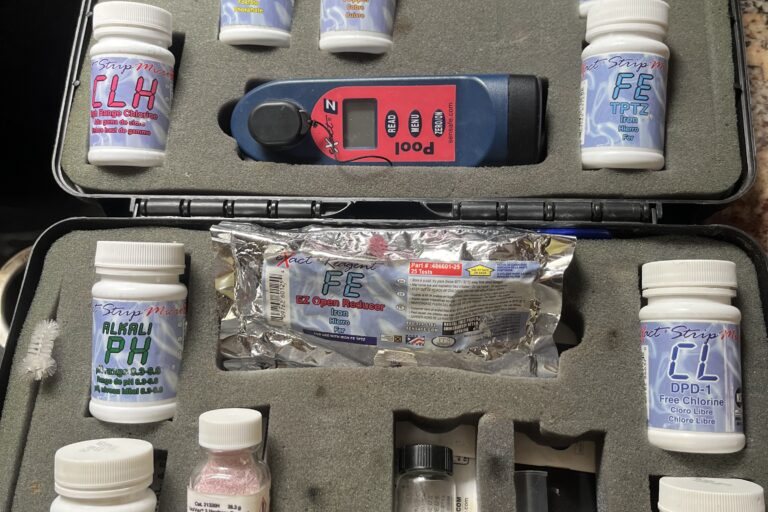
The most important fact about private well water in the Midwest is that no one is checking it for you. The second most important fact is that checking it is neither difficult nor expensive, and that most well problems, once identified, have well-established fixes. This piece walks through the sequence: what to test, when, and how to think about treatment if a test comes back with news.
Start with the two workhorse tests
Health agencies across the region converge on the same baseline advice: test at least annually for coliform bacteria and nitrate.
Coliform bacteria are an indicator, not necessarily a threat in themselves. Their presence says that surface water, soil, or septic influence has a path into your well, and that path could carry organisms that do cause illness. A subset result for E. coli is a stronger signal of fecal contamination and deserves prompt attention.
Nitrate is the agricultural region's signature parameter. It is invisible, tasteless, and matters most for infants and during pregnancy. The federal standard for public systems, 10 milligrams per liter, is the benchmark most labs and health departments use for private wells too. Shallow wells and wells in sandy soils or heavily farmed areas run higher risk.
Beyond the annual pair, sensible additions depend on your situation. A one-time or occasional test for arsenic is widely recommended, since arsenic occurs naturally in groundwater in parts of the Midwest. Homes with older plumbing may test for lead at the tap. Local geology can argue for iron, manganese, hardness, sulfate, or radium, and your county health department or state certified lab can tell you what your area tends to see. Test after any flood that reaches the wellhead, after well repairs, and whenever taste, odor, or color changes.
Getting a sample that means something
Use a certified lab. Kits from a state or accredited private lab come with sterile bottles and instructions, and following the instructions is most of the job: sample from the recommended tap, remove aerators, flame or sanitize per the directions, and get the bottle to the lab within the time window. A sloppy sample produces false alarms and false comfort in roughly equal measure.
Reading results and choosing treatment
A clean result means you file it and repeat next year. A hit means matching the fix to the finding, and this is where well owners should slow down, because treatment equipment is contaminant-specific.
Bacteria usually point first to the well itself: a damaged cap, a casing crack, a flooded pit. The standard sequence is shock chlorination, repair of the defect, and retesting, with continuous disinfection equipment reserved for wells that cannot stay clean. Nitrate is not removed by standard softeners or carbon filters; it takes reverse osmosis, ion exchange designed for nitrate, or distillation, or in some cases a deeper well. Arsenic likewise has dedicated media and reverse osmosis options. Iron, manganese, and hardness are comfort problems more than health problems, handled with oxidizing filters and softeners.
The honest rule of thumb: never buy treatment before you have lab numbers, and be wary of anyone selling a single device as the answer to everything. Reputable water professionals start from your test results, and many owners simply hand the whole loop to regional treatment companies that test private wells, size equipment to the actual chemistry, and service it on a schedule, the same way you would treat a furnace contract.
The maintenance loop
Treatment equipment is not fit-and-forget. Softener salt runs out, filter media exhausts, reverse osmosis membranes age, and ultraviolet lamps dim on a published schedule whether or not the light still glows. Whatever equipment you install, put its service intervals on the same calendar as your annual test.
The full program for a careful well owner fits on an index card: test yearly for bacteria and nitrate, add the tests your local geology suggests, keep the wellhead sealed and the ground sloped away, treat only what the lab says needs treating, and service what you install. It is an hour or two a year and a modest lab fee. Measured against what the well delivers, water for a household, on demand, from your own ground, it is one of the better bargains in rural life.