Missouri
Why Three Water Treatment Quotes Can Describe Three Different Problems
A St. Louis homeowner can compare treatment proposals more clearly by separating the water problem, the equipment, and the company’s promises.
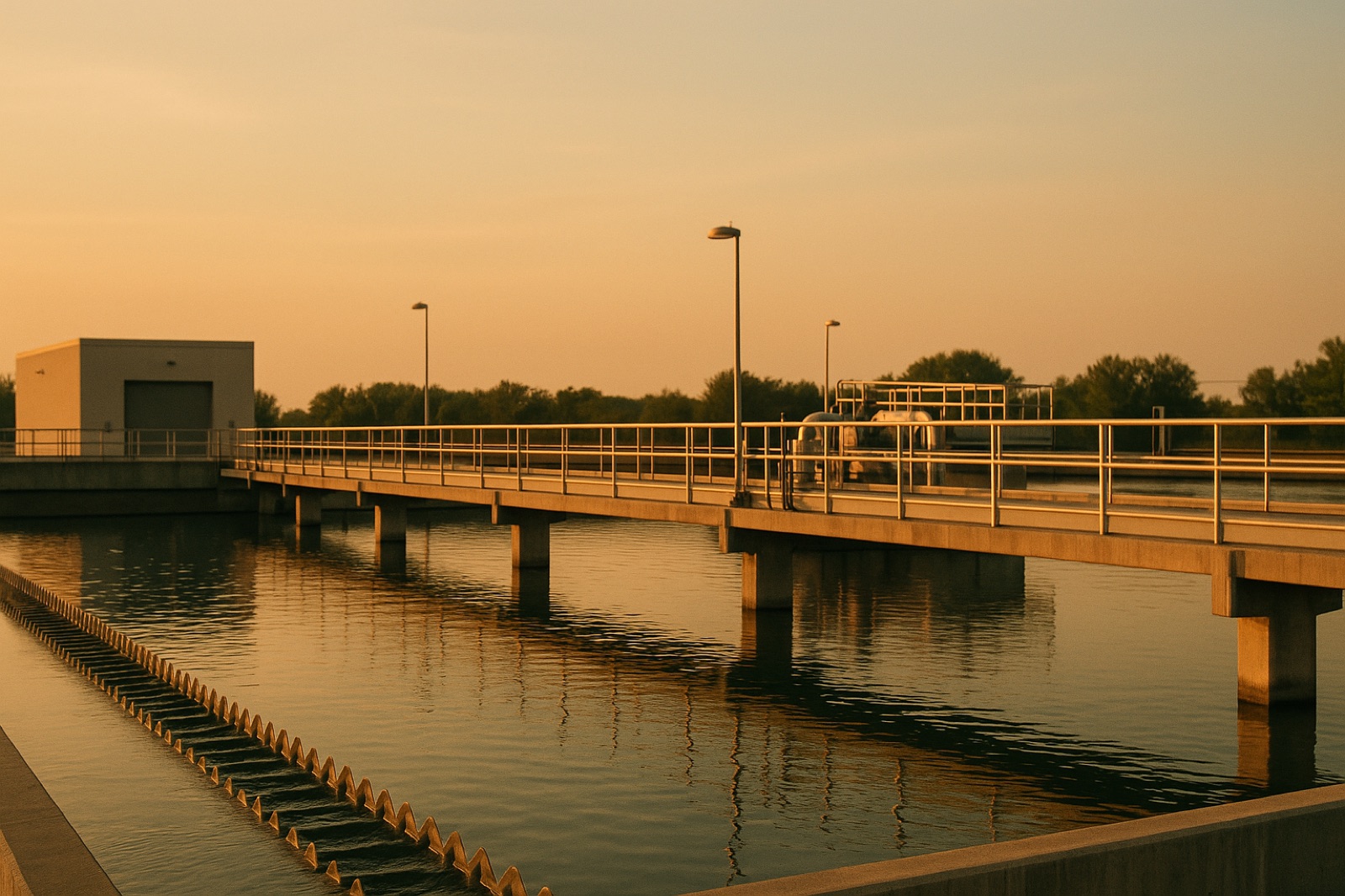
When several water treatment companies inspect the same St. Louis home, their recommendations may not look alike. One may propose a softener. Another may add carbon filtration. A third may recommend treatment at the kitchen sink instead of equipment for the entire house.
That variation does not automatically mean one company is wrong. Water treatment is a chain of decisions: identify the problem, select a process that addresses it, place and size the equipment, and define who will maintain it. Homeowners need a way to compare those decisions separately.
A current Great Lakes story illustrates why system boundaries matter. Circle of Blue reports that the Illinois Department of Natural Resources detected invasive carp in the Illinois River about 80 miles from Lake Michigan, while a project intended to halt their spread was ordered to stop. The September 2026 report on the invasive carp response concerns a much larger water system, but it highlights a useful principle: equipment cannot be evaluated apart from its location, operating authority, and intended job.
Begin with the problem, not the product
Before comparing brands, write down what prompted the search. Common household concerns include mineral scale, unpleasant taste or odor, visible sediment, staining, or uncertainty about a private well. These symptoms do not identify a contaminant by themselves. They are reasons to gather better information.
Ask each company what evidence supports its recommendation. If testing is offered, record what was tested, where the sample was collected, which method was used, and whether results come from an independent laboratory or an in-home demonstration. A proposal should connect each recommended treatment stage to a stated water condition.
Sort the equipment by function
A softener exchanges hardness minerals for other ions and is generally proposed for scale and related household effects. Sediment filters capture particles, with performance depending on the filter rating and replacement schedule. Activated carbon is commonly used for certain taste, odor, and organic compound concerns. Reverse osmosis sends water through a membrane and is often installed for a limited drinking-water tap. Ultraviolet equipment is designed for microbial control but depends on suitable pretreatment and regular lamp service.
These categories are not interchangeable. Ask whether the proposal covers the whole house or selected fixtures, what flow rate it is designed to handle, whether it requires a drain or electricity, and how it may affect water pressure. For a private well, also ask how changing water conditions would trigger retesting or equipment adjustments.
Compare the company’s promises
Credentials can help establish whether a salesperson, installer, or product has been evaluated under a recognized program, but a credential is not a substitute for a clear scope of work. Ask for the credential’s full name, the organization that issued it, its current status, and what activity or performance it actually covers.
Apply the same care to warranties. Separate coverage for tanks, valves, electronics, filters, membranes, labor, and service calls. Record the warranty term for each component, exclusions, required maintenance, transfer rules, and who pays for removal or shipping. A long headline warranty may contain shorter periods for the parts most likely to require service.
Before scheduling visits, homeowners can request a local water-treatment assessment. Because no client domain was supplied with this assignment, editors should confirm that relative destination before publication.
A printable vendor scorecard
Use one copy of this scorecard for each proposal:
Company: __________ Date: __________
Water source: Utility / Private well / Other
Problem to solve: ______________________________
Test and sampling method: ________________________
Results provided in writing: Yes / No
Treatment type and purpose: ______________________
Fixtures served: Whole house / Selected taps
Rated flow or capacity: __________________________
Drain, power, or space required: _________________
Installation included: Yes / No / Unclear
Credentials verified: ___________________________
Equipment warranty: ____________________________
Labor and service coverage: _____________________
Routine maintenance and annual cost: ___________
Total quoted price: ____________________________
Unanswered questions: __________________________
Compare completed scorecards line by line rather than choosing from the total price alone. If vendors describe different problems, ask them to explain the evidence behind that disagreement before requesting revised quotes.
Why publish this guide now
Midwest Water News recorded 3,747 page views, 1,818 visitors, 1,938 search crawls, and 3,304 AI crawls in the supplied reporting period. No assisted-conversion or customer relationship management data was supplied, so those figures show discovery activity, not how many readers hired a company. The useful editorial response is a practical tool for readers such as Erica, a St. Louis homeowner trying to compare companies before requesting an estimate.